
Your shopping basket

Your shopping cart is empty

Our suggestions for your skin

4 échantillons offerts
More than to benefit from
2 échantillons offerts
Free shipping
2 échantillons supplémentaires

Fill in your recipe

Yourfree sample

Have a coupon code? Add it to the next step.

Deliverycharges

Delivery without signature - €5.90 incl. VAT - Free for orders over €59 (France, Belgium, Luxembourg)

Up to €11.90 for the rest of the world!

Mondial Relay - 3,90 € (France, Belgium, Luxembourg))

free for purchases over €39 (France, Belgium and Luxembourg).

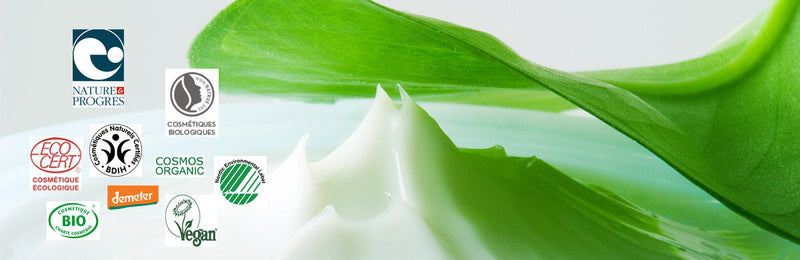
Organic cosmetic labels: strengths and weaknesses

Written on April 30, 2014 by Juliette Sarfati — Updated on August 25, 2022


Vous êtes très nombreux à vous interroger sur les labels des cosmétiques biologiques. Que garantissent tels et tels labels ? Quels sont leurs points forts et points faibles ? En somme, comment s’y retrouver dans cette jungle ?

Pour comprendre leurs tenants et aboutissants une bonne fois pour toutes voici les points forts et les points faible de chaque labels.

Strengths and weaknesses of organic cosmetics labels

Ecocert / Cosmébio

Points forts :

  • Minimum 95% natural ingredients
  • Synthetic dyes and fragrances, petrochemical derivatives (paraffin, silicone, etc.), ethoxylated substances (PEG, Sodium Laureth Sulfate) are prohibited.
  • PVC and PS packaging prohibited

Points faibles :

  • Only 95% of the plant-based ingredients are organic (50% with the "eco-friendly cosmetics" label).
  • Authorized palm oil derivatives
  • No restrictions on esterified and hydrogenated oils
  • Five synthetic preservatives that occur naturally are permitted: why not use their natural equivalents?
  • Sodium Lauryl Sulfate authorized
  • No obligation to use 100% recyclable packaging
  • Authorized PET packaging

BDIH

Points forts :

  • Synthetic dyes and fragrances, petrochemical derivatives (paraffin, silicone, etc.), ethoxylated substances (PEG, Sodium Laureth Sulfate) are prohibited.

Points faibles :

  • No minimum percentage of natural ingredients or organic ingredients
  • Synthetic preservatives that occur naturally and are authorized: why not use their natural equivalents?
  • Authorized palm oil derivatives
  • No restrictions on esterified and hydrogenated oils
  • No obligation to use 100% recyclable packaging
  • Authorized PET packaging

Natrue

Points forts :

  • Synthetic fragrances and dyes, petrochemicals, and Sodium Laureth Sulfate prohibited
  • Plastics containing chlorine (PVC) prohibited
  • Sustainability report or mandatory product life cycle impact study

Points faibles :

  • Limitations on the maximum percentage of natural ingredients (15 to 20%)
  • Only 0 to 95% organic ingredients minimum: why not 100%?
  • Existing synthetic preservatives authorized in their natural state: why not use their natural equivalents?
  • Authorized palm oil derivatives
  • No restrictions on esterified and hydrogenated oils
  • Sodium Lauryl Sulfate permitted
  • Authorized PET packaging

Nature & progress

Points forts :

  • Minimum 95% natural ingredients
  • Palm oil derivatives banned from January1, 2015: we at oOlution are delighted to see that an organic label is finally taking a stand against palm oil and its devastating effects.
  • Natural raw materials must be sourced from organic farming whenever available.
  • Chemical ingredients are only tolerated if no organic ingredient is available that can replace their function.
  • Colorants, fragrances, antioxidants, preservatives, oils, and other petrochemical derivatives (silicones, paraffin) are prohibited.
  • PVC and EPS packaging prohibited
  • Guidelines relating to water management, the use of renewable energies, waste and emissions control, and transport improvements

Points faibles :

  • No restrictions on the maximum percentage of synthetic ingredients
  • Authorized PET packaging

Cosmos Organic

Points forts :

  • Nanomaterials and ethoxylated substances (PEG, Sodium Laureth Sulfate) are prohibited.
  • Exclusive use of raw materials that comply with the criteria defined by the Convention on International Trade in Endangered Species of Wild Fauna and Flora (CITES)
  • Packaging: PVC and polystyrene prohibited

Points faibles :

  • No minimum percentage of natural ingredients, simply an incentive to use as many as possible.
  • 2% authorized petrochemical compounds (9 authorized semi-natural, semi-petrochemical molecules)
  • Only 95% of plant-based ingredients are organically grown: why not 100%?
  • Five synthetic preservatives that occur naturally are permitted: why not use their natural equivalents?
  • Authorized palm oil derivatives
  • No restrictions on esterified and hydrogenated oils

Demeter

Points forts :

  • Petrochemical derivatives (benzene, hexane, propylene glycol, butylene glycol, etc.), chelating agents (EDTA), and synthetic fragrances are prohibited.

Points faibles :

  • No minimum requirement for organic or Demeter ingredients to be certified
  • No strict criteria on packaging composition and recyclability: simply an incentive to limit them

The White Swan (Nordic Swan)

Points forts :

  • Parabens, EDTA, borates, and triclosan are prohibited.
  • Packaging: all elements must be separable, packaging must be minimized, and chlorine and PVC are prohibited.
  • Limits concerning the biodegradability, toxicity, and bioaccumulation of ingredients

Points faibles :

  • No minimum percentage of organic or natural ingredients
  • No maximum on the percentage of synthetic ingredients allowed
  • No biodiversity conservation policy

Vegetarian Society

Points forts :

  • No animal-derived ingredients except eggs from free-range hens

Points faibles :

  • No details on the naturalness of ingredients, biodiversity preservation, packaging, or environmental protection.
  • Authorized palm oil derivatives

Vegan Society

Points forts :

  • No animal-derived ingredients
  • Reduction in water and crop quantities: these resources are used to feed animals

Points faibles :

  • No details on the naturalness of ingredients, biodiversity preservation, or packaging
  • Authorized palm oil derivatives

Possible areas for improvement for organic labels

Avec ce tableau, les points forts et les points faibles des différents labels de cosmétiques bio n'ont plus de secrets pour vous. C’est à partir de cette étude comparée des référentiels de chacun des labels que nous avons réfléchi aux pistes d’amélioration possibles et que nous avons établi notre propre cahier des charges.

Parmi les améliorations souhaitables chez les labels bio, trois problématiques nous tiennent à cœur :

1. Respect for biodiversity: palm oil

Les soins oO n’ont ni huile de palme, ni dérivés de celle-ci. En effet, nous ne souhaitons en aucun cas chez oO contribuer à la déforestation massive liée à leur utilisation. À part Nature & Progrès qui interdit l’huile de palme et ses dérivés à partir de 2015, aucun autre label de produits cosmétiques ne se positionne sur son utilisation.

2. Esterified and hydrogenated oils, as well as global environmental initiatives.

Il en est de même quant aux huiles estérifiées et hydrogénées : aucun label ne se positionne sur leur utilisation. Ce sont des huiles chimiquement modifiées de mauvaise qualité et dont les coûts de production sont très faibles que nous refusons d’utiliser dans nos soins. Nous ne voulons pas non plus être partiellement bio. Les huiles de première pression et les ingrédients bio coûtent certes plus cher mais c’est le prix à payer pour vendre des produits de qualité, et dont nous sommes fiers à 100%.

3. Eco-design

Les labels encouragent les marques à une meilleure gestion des déchets et à une production plus économe en énergie. Cependant ces recommandations se limitent bien souvent au principe du volontariat et ne constituent pas d’obligations formelles. Selon nous, la simple incitation ne suffit pas et la responsabilité environnementale ne saurait se cantonner à quelques actions éparses. Nous cherchions donc à aller au-delà en adoptant une démarche plus globale et basée sur une approche scientifique. Nous sommes la première marque de cosmétiques à avoir entrepris une étude d’éco-conception préventive sur tous nos produits, afin de limiter à la source nos impacts environnementaux.

What oOlution does

Toute la gamme de soins oOlution est garantie 100% d'origine naturelle végétale, sans aucun dérivé d'huile de palme et 100% éco-conçue ! De plus, nous n'utilisons que des actifs issus de l'agriculture biologique ou de cueillettes durables pour formuler nos soins :

  • Glow Up: the radiance/detox moisturizer for normal to combination skin
  • Whole Again: nourishing/protective care for very dry to fragile skin
  • Check Matte: mattifying/regulating skincare for combination to oily skin
  • Age Out: anti-aging andwrinkles carewrinkles mature skin
  • Eye Love: multi-action eye contour creamdark shadows, puffiness, and fine lines
  • Happy Hands: the cream hand and nail cream
  • Magic Milk: moisturizing body milk for normal skin
  • Body Guard: nourishing cream very dry to fragile skin
  • Game Over: the balancing anti-blemish serum for all skin types
  • Light Up: the anti-dark spot serum for mature skin
  • Flower Power: facial treatment water for all skin types
  • Feet Good: comforting cream for very dry to fragile skin
  • Loving Balm: nourishing repair balm for very dry to fragile skin

Sources :

The transformation of your skin starts here.

Découvrez vos vrais besoins cutanés et nos conseils sur-mesure avec notre diagnostic de peau

NEW
The starter kit

Un protocole complet en 4 étapes à 9,90€, 100% remboursé